
Dental occlusion refers to the way the upper and lower teeth align and contact each other when the mouth is closed. Correct occlusion is essential for good oral health and for the proper functioning of the temporomandibular joint (TMJ).
When there is an incorrect position of the upper and lower jaws, it can result in significant problems, both at the dental level and in other body systems, namely temporomandibular joint (TMJ) dysfunctions.
What is
Dental Occlusion?
Dental occlusion refers to the alignment and contact between the upper and lower teeth.
When the teeth are correctly positioned, the pressure during chewing is distributed in a balanced way among all the teeth, allowing the masticatory system to function harmoniously.
However, problems such as malocclusion can occur due to incorrect position of the upper and lower jaws, leading to a misalignment of the teeth and the development of temporomandibular joint (TMJ) dysfunctions.
Malocclusion can manifest itself in several ways, such as:
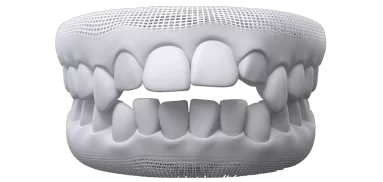
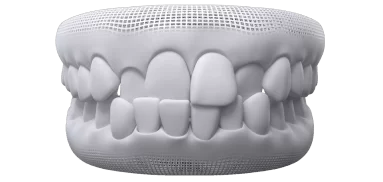
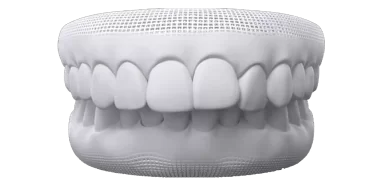
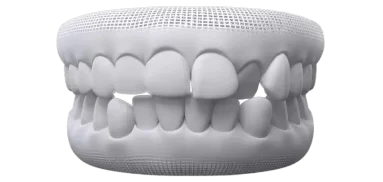
These problems can result in pain when chewing, excessive tooth wear, crackling in the jaw and even TMJ dysfunction.
Temporomandibular Joint
(TMJ) Dysfunctions
The temporomandibular joint (TMJ) is one of the most complex joints in the human body, connecting the jawbone to the base of the skull. This joint allows for the movements necessary for functions such as chewing, speaking, and swallowing.
When there is a misalignment or dysfunction in this joint, a condition called temporomandibular dysfunction can arise.
TMJ dysfunctions are often associated with incorrect position of the upper and lower jaws, but they can also be caused by other factors such as trauma, bruxism (teeth grinding), stress or poor posture.
Symptoms of the Temporomandibular Joint
The most common symptoms of TMJ dysfunction include:
These symptoms can affect quality of life. The Medicis Dental Clinic offers multidisciplinary treatment for TMJ dysfunctions, including medication, gutters, physiotherapy, orthodontics and maxillofacial surgery, depending on the severity of the case.
Treatments for Dental Occlusion and TMJ Dysfunctions at Clínica Medicis Dental
At Clínica Medicis Dental, we offer personalized treatment plans for TMJ malocclusion and dysfunctions, tailored to the severity, symptoms, and cause of the condition. We use modern and effective techniques to correct the problem and relieve symptoms.
Medication
Medication is often used as one of the first steps in the treatment of TMJ dysfunctions, especially to control pain and inflammation.
Nonsteroidal anti-inflammatory drugs (NSAIDs) and muscle relaxants may be prescribed to relieve muscle tension and reduce discomfort associated with TMJ dysfunctions.
Use of Leaks
Leaks (occlusal plates) are custom-made removable devices, usually used at night, to treat TMJ dysfunctions
.
They help relieve tension, reduce bruxism, promote correct alignment, and relieve pressure on the temporomandibular joint, being effective in relieving
symptoms.
Physiotherapy
Physical therapy is essential in the treatment of TMJ dysfunctions, improving joint mobility, reducing pain and strengthening the jaw muscles.
Techniques such as stretching, massage, and therapeutic heat help relieve tension and improve joint function. It may also include manual adjustments to promote a more natural and balanced alignment of the jaw and jaws.
Postural Reeducation
Postural reeducation is essential in the treatment of TMJ dysfunctions, as posture problems, such as misalignment of the head and neck, can aggravate these conditions. Correcting posture, especially in the neck and shoulders, reduces pressure on the jaw and temporomandibular joint.
Patients are advised to adopt appropriate postures, especially when using the computer or tilting the head, to prevent overload on the joint.
Orthodontic Treatment
Orthodontic treatment is effective in correcting malocclusion and relieving symptoms of TMJ dysfunctions. With dental braces, it is possible to align the teeth and adjust the jaws, reducing the overload on the temporomandibular joint.
In addition to improving aesthetics, orthodontics also favors a correct masticatory function, preventing TMJ problems.
Diagnosis and Evaluation
Before starting any treatment for dental occlusion or TMJ dysfunctions, it is essential to perform a thorough and detailed diagnosis.
At Clínica Medicis Dental, our specialists carry out a thorough evaluation through clinical examinations, x-rays and, in some cases, CT scans to obtain a clear picture of the condition of the temporomandibular joint and jaws.
Based on this assessment, a personalized treatment plan is drawn up, tailored to the specific needs of each patient. The goal is to not only treat the symptoms, but also correct the underlying cause of the problem to prevent future complications.
Continued care
After initial treatment, it is important that patients continue to monitor their condition and take steps to prevent the reappearance of symptoms.

The Medicis Dental Clinic offers continuous follow-up to ensure that the treatment is effective in the long term, providing guidance on healthy lifestyle habits, posture care and, if necessary, adjusting the use of splints or other devices.
If you have dental occlusion problems or TMJ dysfunctions, schedule an appointment at the Medicis Dental Clinic, in Leiria, for a personalized treatment.

